
Condition
Auto Accidents and Work Injuries
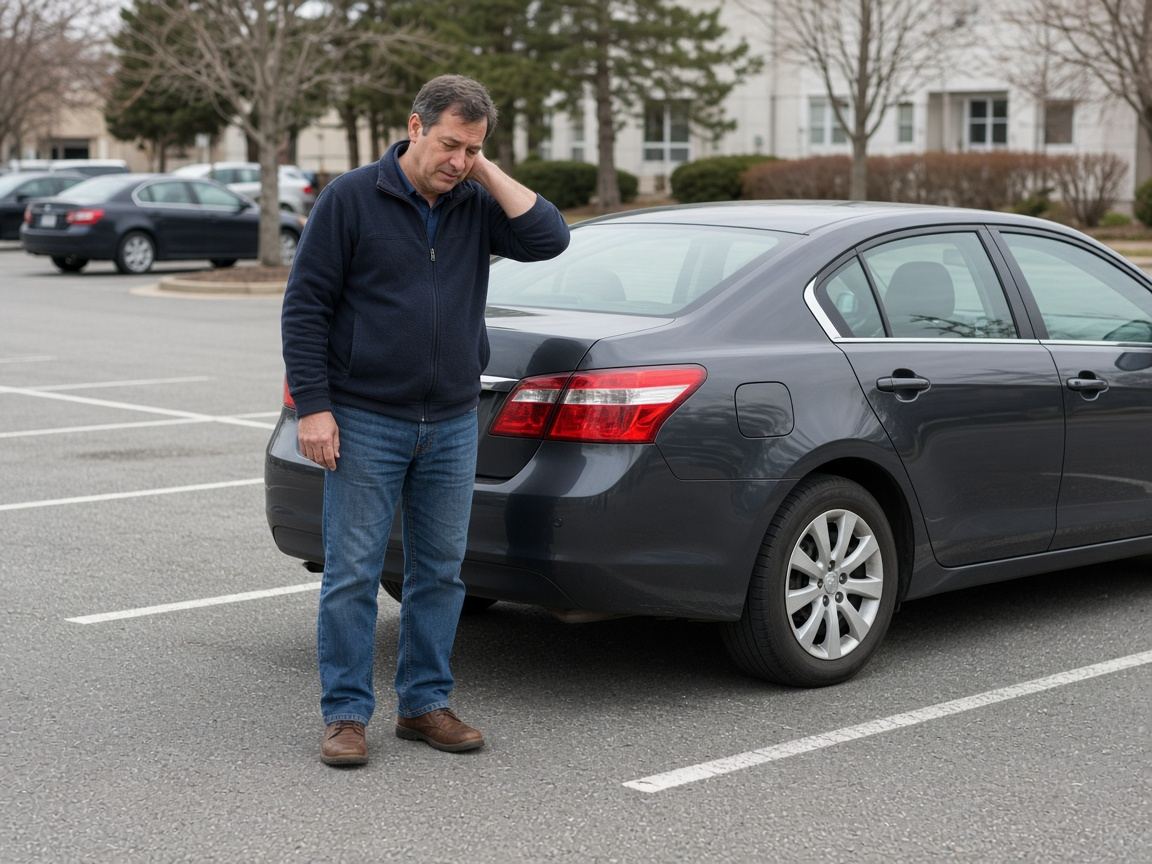
Delaware roads and Delaware jobs produce the same delayed story: you walk away from a bumper hit or a lift at work, then the neck, back, or shoulder announces itself 48 hours later.
Dr. Richardson in Middletown focuses on auto, work, and personal injury, including whiplash and extremities. Dr. Mauragas in Smyrna handles work-comp cases. Dr. Johnson in Wilmington has personal-injury and MRI coursework.
Use the motor vehicle / workers’ compensation forms before you arrive. Advertised new-patient specials do not apply to PI and WC — you are still welcome; the billing path is different.
The delayed-onset pattern is not psychological and it is worth understanding, because it is the reason so many people decline the ambulance and regret it on Wednesday. In the moments after a collision the sympathetic nervous system floods the body with adrenaline and noradrenaline, which suppress pain perception substantially. Underneath that, the actual tissue injury — micro-tearing in ligament and muscle — sets off an inflammatory response that takes twenty-four to seventy-two hours to peak. You feel the injury when the adrenaline clears and the inflammation arrives, not when it happened.
Low-speed does not mean low-force either. Occupant acceleration in a rear-end collision routinely exceeds the acceleration of the vehicle itself, and the neck goes through an S-shaped deformation during the first 100 milliseconds — the lower cervical segments extending while the upper ones are still flexed — that does not occur in any voluntary movement. That is why vehicle damage correlates so poorly with occupant injury, and why a bumper tap in a Christiana car park can produce weeks of symptoms.
Our examination is built to produce a record as well as a treatment plan. History of the mechanism, including where you were seated, whether you saw it coming, headrest position, and seatbelt use. A full neurological screen. Orthopaedic testing. Computerised range-of-motion measurement, which gives numbers rather than adjectives and can be repeated to demonstrate change. Referral for imaging where the exam calls for it rather than as a default. And documentation written up the same way whether or not there is a claim attached.
Treatment usually starts gentler than people expect. In the acute phase the goal is settling protective muscle spasm and restoring motion within tolerance — soft-tissue work, gentle mobilisation, electrical muscle stimulation, and specific low-load exercise. Higher-velocity technique comes later and only where the exam supports it. The evidence in whiplash-associated disorder consistently favours early, gradual return to normal movement over rest and collars, and we treat accordingly.
Work injuries follow a similar clinical path with a different administrative one. Dr. Mauragas in Smyrna is a certified workers' compensation doctor, which matters because work-comp cases have specific reporting, authorisation, and return-to-work documentation requirements. The most common category we see in Delaware is lifting and repetitive-strain injury from warehouse, distribution, and healthcare work, along with slips on wet floors and injuries from awkward loads.
Two practical notes people appreciate hearing early. Advertised new-patient pricing does not apply to personal-injury or workers' compensation cases, because those are billed through a different path entirely — you are welcome either way, and no one should be surprised by that at the desk. And symptoms that are worth flagging immediately rather than waiting for your next visit: worsening arm or leg weakness, numbness in the groin or changes in bladder control, severe headache unlike anything before, visual disturbance, or difficulty swallowing.
Related conditions
Services that often help
Doctors to start with
Verified outcomes at our clinics
Documented auto & work injuries cases on ChiropracticResults.com — not a guarantee of individual results.
Wilmington
4 verified auto & work injuries outcomes
Wilmington clinic →Smyrna
4 verified auto & work injuries outcomes
Smyrna clinic →Camden & Dover
3 verified auto & work injuries outcomes
Dover clinic →This complaint at a specific clinic
This page is the statewide guide. Each clinic site has its own address, doctors, and hours for auto & work injuries — that is the page to open if you already know which office you will attend.
FAQ
I was in a crash but I felt fine. Should I still come in?
Yes. Adrenaline hides injuries. Stiffness on day two or three is common. Early exam is smarter than waiting for it to become chronic.
Do you handle workers’ compensation?
Yes. Dr. Mauragas is a certified workers’ compensation doctor. Use the PI/WC forms under New Patients.
How soon after a crash should I be examined?
Within the first few days is ideal, and there are two reasons. Clinically, an early baseline of range of motion and neurological findings makes it possible to show whether things are improving or not. Administratively, a long gap between the collision and the first medical contact is the single most common reason an insurer questions whether the injury came from the crash at all.
What is PIP and how does it work in Delaware?
Delaware is a no-fault state for medical expenses, which means personal injury protection coverage on the vehicle you were in pays for treatment regardless of who caused the collision. Every Delaware auto policy carries a minimum of $15,000 per person. You do not have to establish fault first, and using it does not depend on suing anybody. We will help you open the claim if it has not been opened already.
What do I need to bring for a work injury?
The date and mechanism of the injury, the name of your employer and their workers' compensation carrier, your claim number if one has been assigned, and any paperwork the employer gave you when you reported it. If you have not reported the injury to your employer yet, do that first — an unreported work injury creates problems that clinical care cannot fix later.
Will you talk to my attorney or my adjuster?
We provide the records that are requested with your written authorisation: history, examination findings, objective range-of-motion measurements, treatment provided, and progress. What we will not do is shape findings around a claim. Documenting exactly what we find is what makes the record worth anything, both to you and to the people reading it.
How long does treatment usually take?
It depends heavily on severity and on how quickly care started. A straightforward soft-tissue injury caught early often resolves over six to eight weeks of decreasing frequency. Cases involving pre-existing degeneration, higher-speed collisions, or several months of delay before anyone examined the patient take longer. We re-measure and reassess rather than booking an open-ended plan.