
Condition
Scoliosis
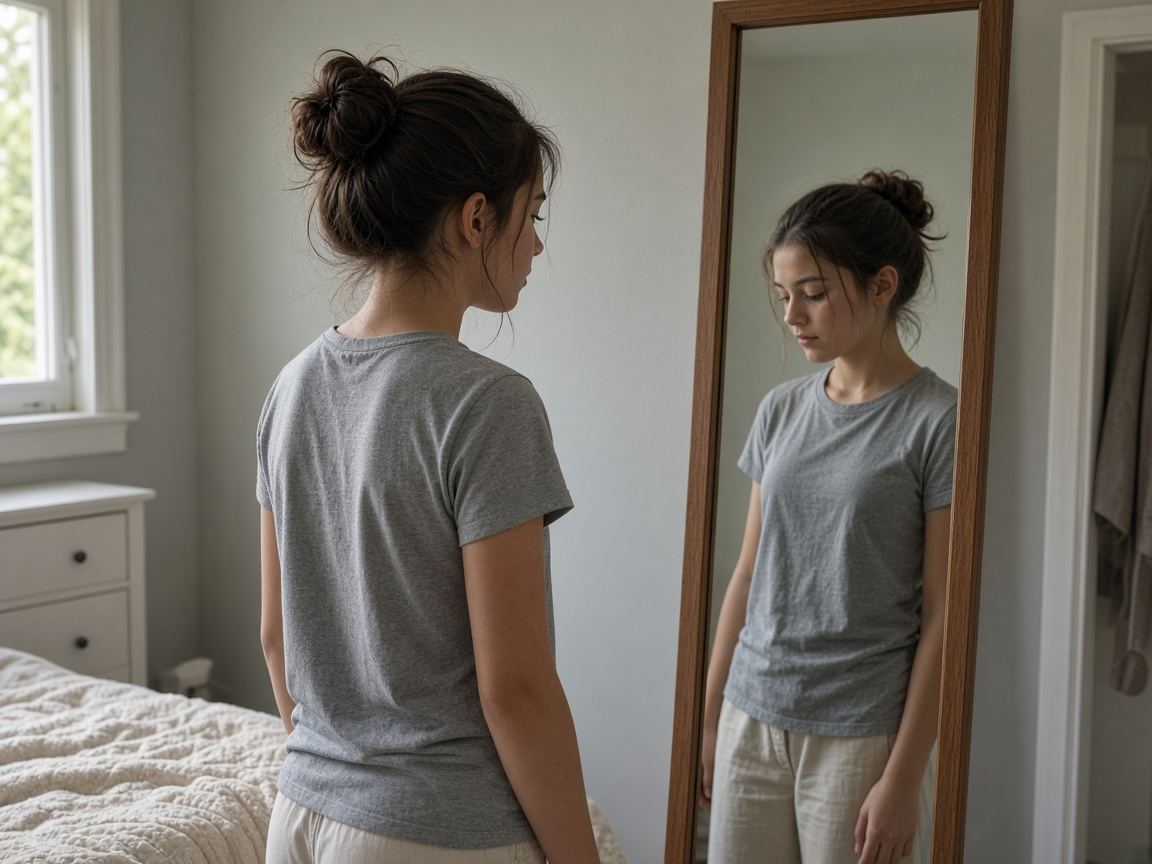
Clinics sell “scoliosis correction” with before-after posters. An honest clinic says: adult scoliosis pain is often the segments next to the curve working too hard. Adolescent scoliosis is a monitoring and family conversation. Both deserve an exam, not a marketing photo.
Computerized range of motion, specific adjusting, and muscle work are the tools. A desk-and-backpack overlay can make a known curve feel louder during the school year — that is endurance and load, not a new curve.
Rapid curve progression, neurological change, or breathing limitation is medical, not a wellness plan.
It helps to be precise about what scoliosis is. It is a three-dimensional deformity — the spine curves sideways and the vertebrae also rotate, which is what produces the rib hump visible when someone bends forward. It is not caused by carrying a backpack on one shoulder, by sleeping oddly, or by bad posture, and roughly eight in ten adolescent cases have no identifiable cause at all. Telling a family that is often the most useful thing said in the first appointment.
What we can genuinely offer is treatment of the symptoms and mechanics that surround the curve. In an adult, the segments immediately above and below a curve typically carry more load and lose motion, the muscles on the convex side work continuously, and the ribs on the concave side stiffen. Those are all treatable, and treating them changes how the person feels day to day even though the Cobb angle is unaffected. We measure motion with computerized range-of-motion testing so improvement is tracked against numbers rather than impressions.
For adolescents, our role is deliberately narrow and we think that is the right call. We can perform an Adam's forward-bend test and scoliometer measurement, treat pain and restricted motion, and support activity. What we do not do is manage curve progression — that requires serial standing X-rays and orthopaedic judgement about bracing during the growth window, and getting that timing wrong has consequences. Dr. Leary in Dover handles the paediatric side and refers into that pathway rather than around it.
The claim we deliberately avoid making is curve correction. Some practices advertise it, usually with before-and-after images taken in different postures. A mature spine's structural curve does not straighten through adjusting, and a growing spine's progression is governed by growth and genetics rather than by manual therapy. We would rather be the clinic a family trusts on the honest version.
Refer-out triggers are clear: rapid progression in a growing child, a curve with atypical features such as a left thoracic pattern, any neurological change in the legs, breathing limitation, or pain that is severe, night-time, or accompanied by systemic symptoms. Those need imaging and specialist review promptly.
Related conditions
Services that often help
Doctors to start with
This complaint at a specific clinic
This page is the statewide guide. Each clinic site has its own address, doctors, and hours for scoliosis — that is the page to open if you already know which office you will attend.
FAQ
Can a chiropractor straighten scoliosis?
We do not advertise curve correction as a product. We treat pain, stiffness, and endurance in a spine that has a curve. Pediatric curves still belong in a monitoring plan with the right medical specialists.
Do you see teens with scoliosis?
Yes, with parental consent. Dr. Leary (ICPA, Dover) is the capital-area pediatric lead. Screening is not the same as a Boston-brace clinic — we stay in our lane and refer when cobb angles need that world.
What size curve actually matters?
Cobb angle is the measurement, taken from a standing X-ray. Under 10 degrees is not classified as scoliosis at all. Between 10 and 25 degrees in a growing adolescent is monitored with repeat imaging. Between 25 and 45 degrees during growth is where bracing is usually discussed. Above roughly 45 to 50 degrees is a surgical conversation. Those thresholds belong to an orthopaedic specialist, not to us, and we say so rather than implying our care changes which bracket you sit in.
Does scoliosis always cause pain?
No, and this surprises people. Adolescent idiopathic scoliosis is frequently painless, which is why it is usually found on a screening rather than because a teenager complained. Pain in an adolescent with a curve is worth investigating rather than assuming the curve explains it. Adult scoliosis is more often painful, but the pain typically comes from arthritic change and overworked segments adjacent to the curve rather than from the curve itself.
Will exercise make my curve worse?
No. Activity is protective rather than risky, and one of the more damaging things a scoliosis diagnosis does is make families cautious about sport. Strength and general conditioning improve tolerance and comfort. Specific scoliosis exercise approaches such as the Schroth method have reasonable evidence for improving posture and reducing pain, and we are happy to work alongside a therapist trained in them.
What is different about adult scoliosis?
Two things. Some adults have an adolescent curve that has been there for decades and is now symptomatic because of arthritic change. Others develop a curve in later life as discs and facet joints degenerate asymmetrically — degenerative de novo scoliosis. The second group often presents with leg symptoms from associated stenosis rather than back pain, which changes the workup and sometimes the destination.