
Condition
Sports Injuries
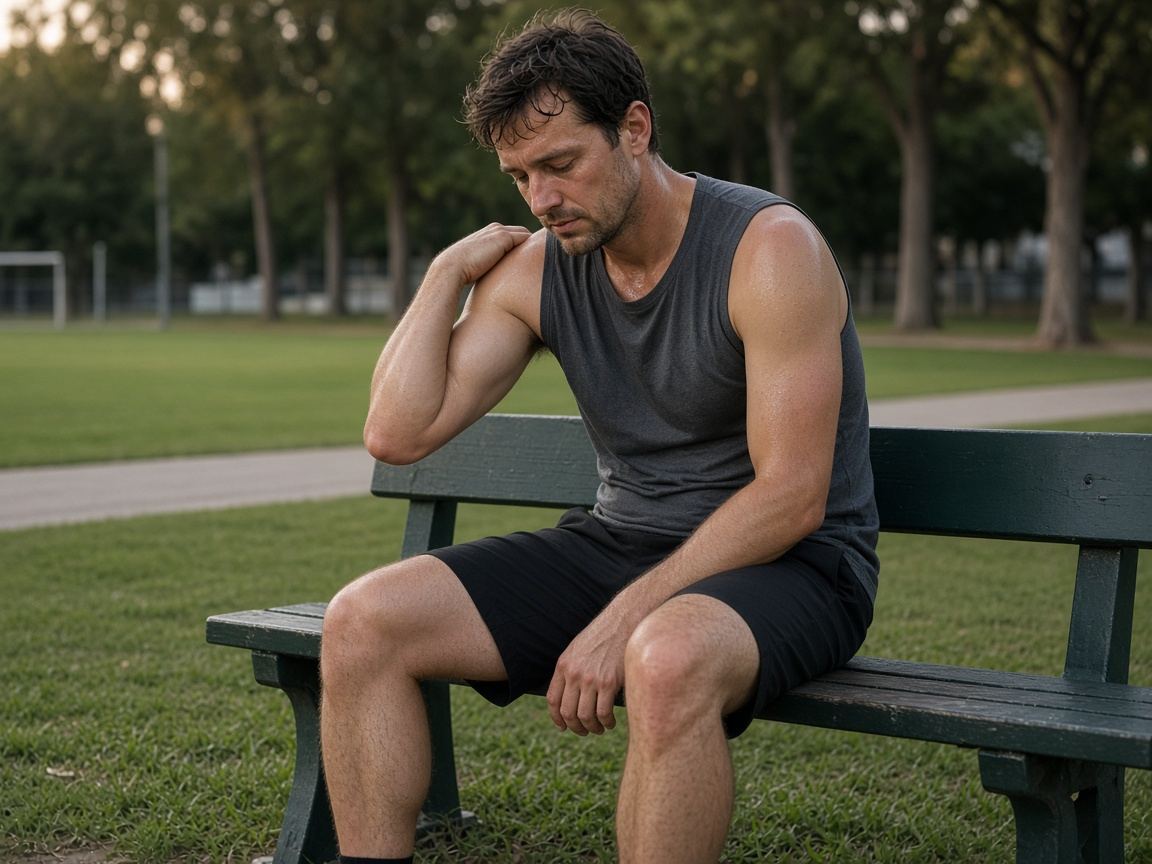
Sports injuries here are shoulders, ankles, low backs, and necks from rec leagues, field hockey, football, lifting, and running the Michael Castle trail like it is a race.
The useful distinction on the first visit is between an acute injury and an overuse one, because they behave completely differently. Acute injuries have a moment — you can name the play, the rep, the step off the kerb. Tissue failed under a single load and the job is protecting it while it heals, then rebuilding what the injury and the layoff took. Overuse injuries have no moment. They appear gradually, hurt at the start of activity, warm up deceptively in the middle, and are worse the following morning. Tissue is failing faster than it is repairing, and the job is finding out why — which is nearly always training load, technique, or something restricted elsewhere in the chain.
That second category is where most athletes get stuck, because the instinct is to rest and the rest does not work. Two weeks off an Achilles tendon reduces the pain and does nothing about the calf that is not absorbing load, the ankle that has lost dorsiflexion, or the sudden jump in mileage that started it. Return to the same training and the tendon returns to the same state within a fortnight. Fixing the cause is less satisfying than fixing the symptom and it is the only version that lasts.
Kinetic chain thinking is not jargon here, it is the reason a knee gets treated by looking at a hip. Loss of ankle dorsiflexion changes how the knee tracks under load. A hip that will not extend forces the lumbar spine to make up the difference on every stride. A stiff mid-back sends the shoulder looking for range it does not have, which is how throwing athletes and swimmers end up with impingement. Treating only the painful joint in any of those cases is how an athlete accumulates a file of unrelated injuries that are, in fact, entirely related.
Youth athletes get handled differently and it is worth parents knowing why. Open growth plates mean pain near a joint in a growing child is a different proposition than the same pain in an adult, and some presentations are worth imaging that would be unremarkable at thirty. Single-sport specialisation and year-round play produce overuse injuries in twelve-year-olds that used to appear in twenty-five-year-olds. And the pressure to play through it — from the season, the team, sometimes the parent — is the single biggest reason a manageable problem becomes a chronic one.
Dr. Renaud’s ICCSP credential, Dr. Hierlmaier’s training background, and shockwave in Newark, Wilmington, and Smyrna give athletes more than a pep talk and a stretch band.
If you cannot train, say so. The plan should get you back to the sport you actually do — not a generic “core” PDF.
Related conditions
Services that often help
Doctors to start with
This complaint at a specific clinic
This page is the statewide guide. Each clinic site has its own address, doctors, and hours for sports injuries — that is the page to open if you already know which office you will attend.
FAQ
Do you treat youth athletes?
Yes, with parental consent and age-appropriate techniques. Bring the child new-patient forms.
How soon after an injury should I come in?
Once you have ruled out the things that need an emergency department — obvious deformity, inability to bear weight, a joint that gave way completely, numbness or severe swelling. After that, earlier is better. The first week is when swelling and guarding can be managed before they set the pattern, and it is considerably easier than unpicking six weeks of limping.
Do you handle concussion?
Not as the primary provider, and that is deliberate. Concussion is a medical diagnosis with a return-to-play protocol that belongs to a physician. What we can treat is what came with it — the neck almost always takes the same force as the head, and cervical injury produces headaches and dizziness that are frequently attributed to the concussion alone. We work alongside, after clearance.
Can you help with performance, not just injury?
Within limits, and we would rather be honest about them. Restoring range that has been lost, correcting an asymmetry that keeps producing the same injury, and keeping a joint moving through a season are legitimate and measurable. Claims that adjustment improves strength or speed directly are not well supported and you will not hear them here.
When can I go back?
When you have full pain-free range, strength that matches the other side, and the ability to do the specific movements your sport demands at speed. Not when it stops hurting at rest — that arrives long before the tissue is ready, and returning at that point is the single most common route to the same injury again.
What is shockwave for?
Tendon problems that have stalled — Achilles, patellar, plantar fascia, tennis and golfer's elbow — where months have passed with rest and stretching and nothing has changed. It is available at the Newark, Wilmington, and Smyrna clinics and it follows an exam rather than being sold as a package.