
Condition
TMJ and Jaw Pain
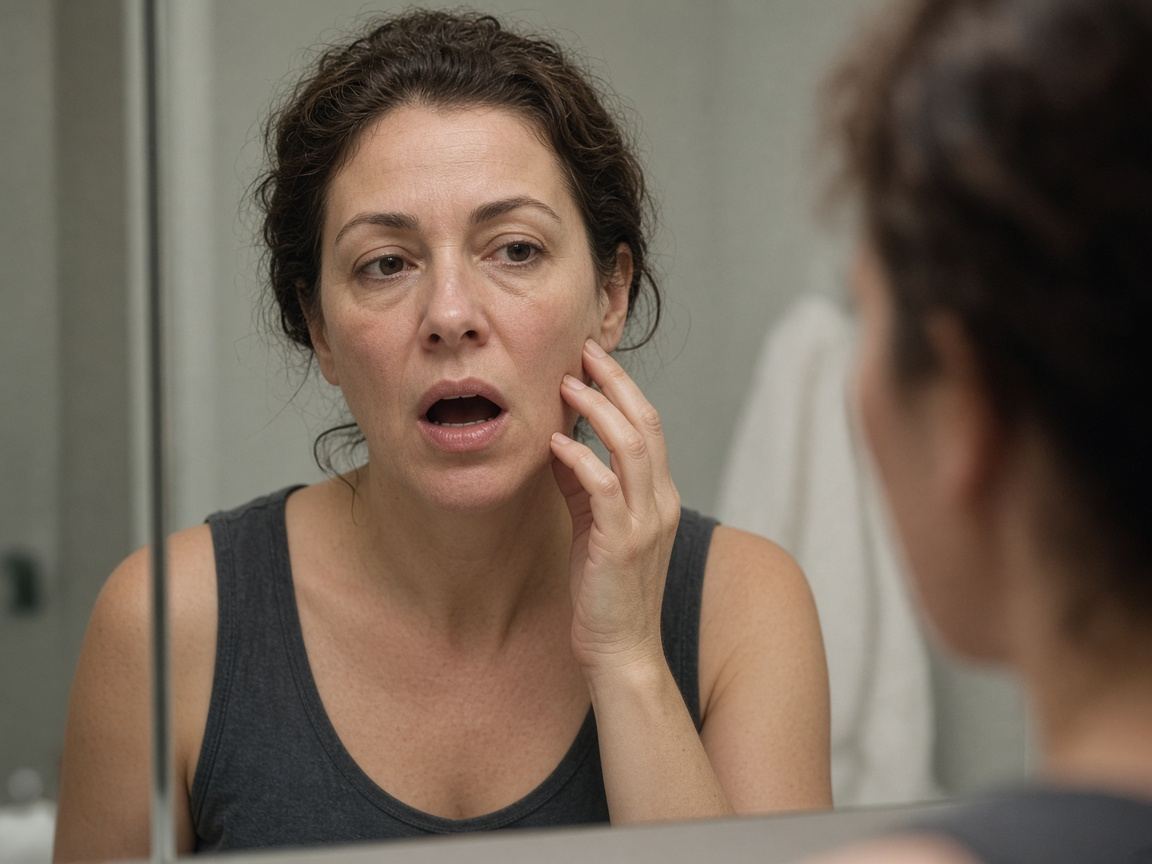
Jaw pain in Wilmington and Newark usually arrives with headaches: clicking, a bagel that will not chew, a face that wakes sore. Clenching through a Delaware work week is not a personality flaw. It is load.
We exam the cervical spine, the masseters, and how the jaw tracks. Acupuncture and massage help the clench loop. Dentistry stays in the lead when a disc displacement or occlusal plan is the center of the story.
When sleep and stress are the fuel, the headache and the jaw are usually one chart. A locked jaw you cannot open is same-day dental or oral-surgery triage, not a wait for Friday.
The mechanics are worth understanding because they explain why treatment goes where it does. The jaw joint sits directly in front of the ear, a couple of centimetres from the upper cervical joints, and the two share muscular attachments and overlapping nerve supply through the trigeminal system. When the upper neck is stiff, the jaw compensates during opening and chewing. When the jaw is clenched for hours, the muscles that anchor to the skull pull on a neck that is already working. Neither one is upstream of the other in every case, which is precisely why we exam both rather than assuming.
The exam is straightforward and tells us most of what we need. We measure how far the jaw opens, watch whether it tracks straight or deviates toward one side, feel the joint through a full open and close, and palpate the masseter, temporalis, and pterygoid muscles for the trigger points that reproduce a patient's headache. Then we test upper cervical motion. A jaw that deviates, opens under 35 millimetres, or locks is a different conversation from one that opens fully but hurts because the muscles never switch off.
Treatment follows what the exam found. Soft-tissue work to the chewing muscles, gentle mobilisation of the joint itself, and adjusting or mobilising the upper cervical segments that are restricting motion. Acupuncture is genuinely useful for the clench loop when stress is the fuel. We also give people the unglamorous parts: a soft-food week when the joint is irritable, keeping the tongue resting on the roof of the mouth so the teeth stay apart during the day, and stopping the habits that load the joint hardest — chewing gum, biting nails, sleeping face-down with the jaw pressed sideways into a pillow.
We are clear about where this stops. A disc that is displaced and not reducing, an arthritic joint with bone-on-bone change, a bite that has shifted after dental work, or a jaw that locks closed and will not open is dental, oral-surgical, or maxillofacial territory. We coordinate rather than compete. If four to six visits have not shifted a case, the answer is usually that the driver was never muscular in the first place.
Related conditions
Services that often help
Doctors to start with
This complaint at a specific clinic
This page is the statewide guide. Each clinic site has its own address, doctors, and hours for tmj / jaw pain — that is the page to open if you already know which office you will attend.
FAQ
Can a chiropractor treat TMJ?
We treat the mechanical overlap of jaw, upper neck, and clenching muscle. We do not replace a dentist, oral surgeon, or night-guard when the bite or joint disc needs that world.
Why do you treat my neck for jaw pain?
The upper cervical joints and the TMJ share muscle and referral patterns. Treating only the jaw fails a lot of “TMJ” charts that are actually neck.
What actually causes the clicking?
The temporomandibular joint has a small cartilage disc that should glide with the jaw as it opens. When that disc sits slightly forward of where it belongs, it snaps back into position partway through opening — that is the click — and often clicks again on the way closed. A click on its own, with full painless opening, is common and does not need treating. A click that arrives with pain, catching, or a jaw that will not open fully is worth an exam.
How long does TMJ treatment take?
Most jaw and upper-neck cases we see settle meaningfully within four to six visits over a month, because the muscular clenching component responds quickly once the neck stops feeding it. What takes longer is the habit itself. If you clench through stress or grind at night, the muscle load returns unless the night-guard and stress side of the picture is dealt with too.
Do I need a night guard as well?
If you grind at night, almost certainly, and that is a dentist's call rather than ours. A guard protects the teeth and reduces overnight muscle load. It does not address the daytime clenching or the neck mechanics, which is why patients often arrive with a guard already fitted and jaw pain that has only partly improved.
Can jaw problems really cause headaches?
Regularly. The masseter and temporalis are large, powerful muscles, and the temporalis fans across the side of the skull exactly where patients describe their headache. Sustained clenching creates referred pain across the temple and behind the eye that is easy to mistake for a primary headache disorder. It is one of the more satisfying patterns to treat because the headache often eases as the jaw does.