
Condition
Men’s Health
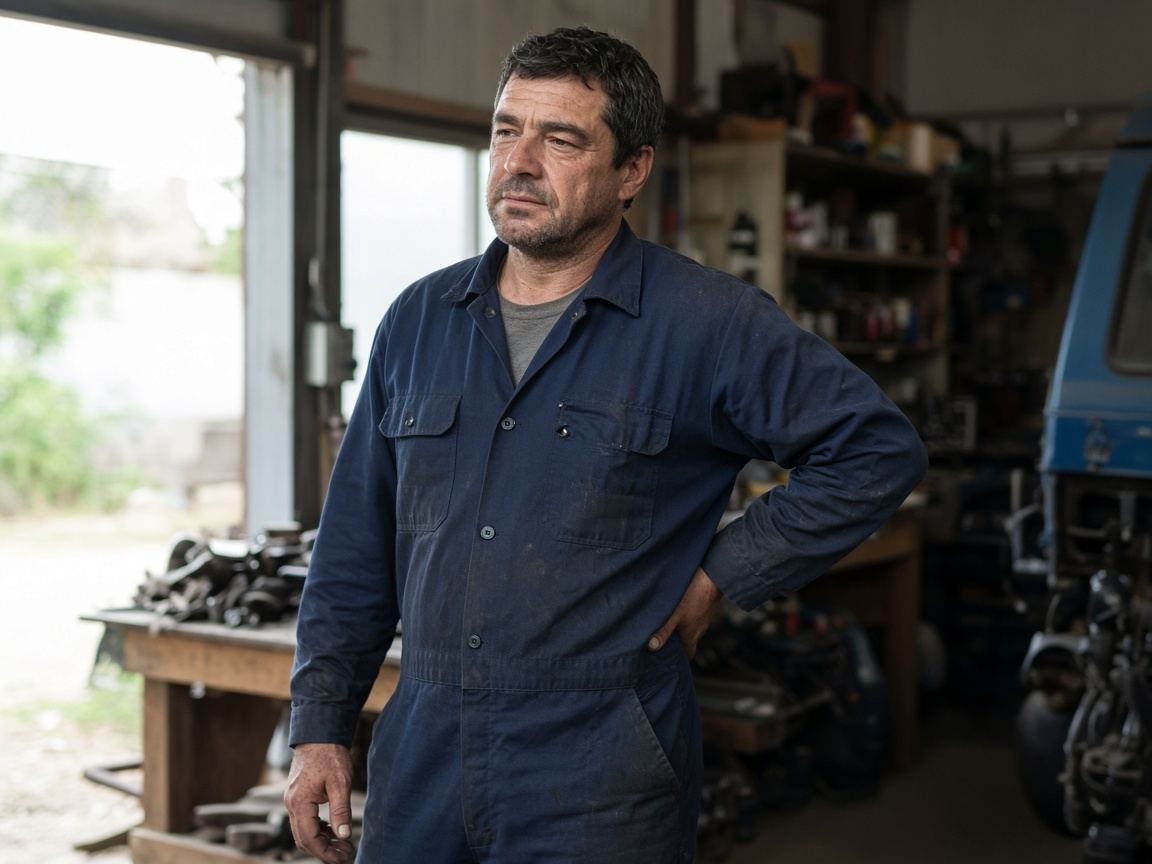
Men’s health here is not a pink-and-blue gimmick. It is the warehouse back, the golf hip, the desk gut that changes lumbar mechanics, and the refusal to come in until swinging a child hurts.
The pattern is consistent enough to be worth naming. Men present later, with worse function, and with a longer history than the one they initially give. A first visit that opens with “it's been about three weeks” frequently turns into three years once the questions get specific — three years of adjusting how you lift, avoiding one side of the gym, and skipping the round of golf you used to play weekly. By the time it gets booked, there are usually two problems: the original one, and everything the body reorganised around it.
That matters because the compensations often hurt more than the source. A hip that lost rotation years ago means the lumbar spine rotates instead, every swing and every lift, and it is the low back that eventually complains. A shoulder that quietly gave up the last twenty degrees overhead means the neck and upper back take up the slack. Treating the loud part alone gets you a good fortnight. Finding what changed first is the difference between relief and resolution, and it is most of what the examination is for.
The work histories in this state produce recognisable versions of it. Warehouse and fulfilment work off Route 273 loads the lumbar spine repetitively and produces disc and sacroiliac complaints. Plant and construction work in Kent County adds overhead loading and shoulders. Long highway commuting on Route 13 and I-95 produces hips and low backs that stiffen from sitting rather than from effort. Desk work produces the same, more slowly and with the neck involved. Then weekend sport asks all of it to perform on Saturday having done nothing since the previous Saturday.
Two things get missed in men often enough to mention. Chronic tendon problems — golfer's and tennis elbow, Achilles, patellar, plantar fascia — are trained through for months on the theory that they will settle, and they mostly do not, because tendon does not heal well under continued load. Shockwave therapy, available at the Newark, Wilmington, and Smyrna clinics, exists specifically for that stalled situation. And chest, jaw, or left arm pain presenting as a musculoskeletal complaint is screened for a cardiac cause before anything else happens. Waiting it out is exactly the instinct that makes that dangerous.
We keep the exam honest and the plan short enough to follow. Shockwave in three clinics helps stubborn tendon issues that men tend to train through.
Related conditions
Services that often help
Doctors to start with
This complaint at a specific clinic
This page is the statewide guide. Each clinic site has its own address, doctors, and hours for men’s health — that is the page to open if you already know which office you will attend.
FAQ
Do I need a medical referral?
Usually no. If your history needs a physician in the loop, we will say so.
I have had this for years. Is it too late?
Almost never, though the honest version is that a ten-year problem does not resolve in three visits. Long-standing complaints usually involve compensations built up over years — a hip that stopped rotating, a shoulder that gave up overhead range so quietly you adapted around it. Those unwind, but they unwind at their own pace and the exercise side matters more than the table time.
Will I have to stop lifting or playing?
Rarely completely, and we start from the assumption that you will not anyway. What usually changes is loading, range, or frequency for a defined period, with a specific plan for getting back. A blanket instruction to rest is easy to give and almost never followed, which makes it worse than a modification you will actually stick to.
How many visits, realistically?
For a straightforward mechanical complaint caught reasonably early, often somewhere between six and twelve over a few weeks, tapering as it improves. Long-standing or injury-related cases run longer. You get that estimate at the end of the first exam, in a number, and we revise it out loud if the case is not behaving as expected.
Is a cracking sound bad?
No. The noise is gas releasing from within the joint capsule as pressure changes — the same phenomenon as cracking a knuckle. It is not bones grinding, it is not a measure of how well an adjustment worked, and its absence does not mean nothing happened. Several of the techniques used here make no noise at all.